
CTU Mood of the Workforce 2026.
03 February 2026
Working Kiwis Signal Crisis in 2026 Mood of the Workforce Survey
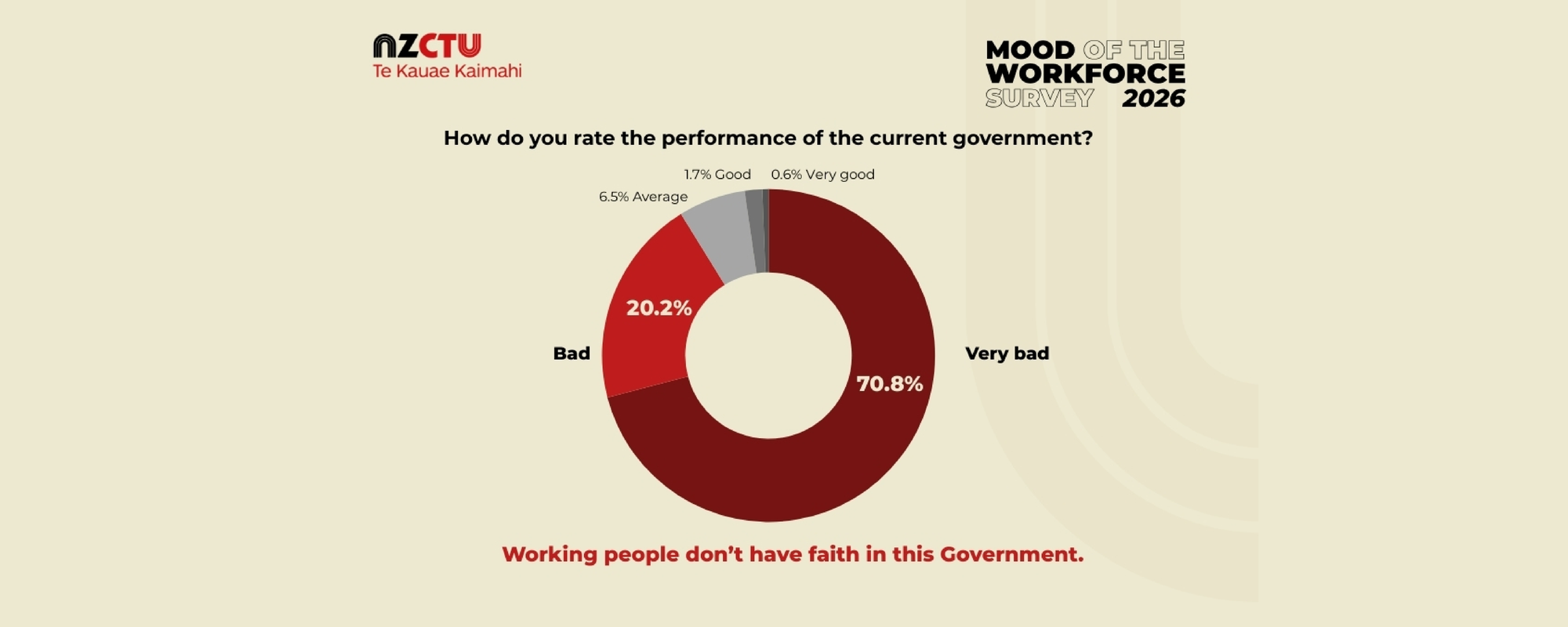
The NZCTU’s Mood of the Workforce 2026 survey paints a stark picture of the current experiences of working people across Aotearoa, revealing deep strain across workplaces and public services, and a growing sense of exhaustion and disillusionment.
The 2026 survey had 3,578 responses, the largest since the survey began in 2019, and generated 5,720 written comments. Working people from a broad range of industries took part, including teachers, nurses, supermarket workers, factory staff, contractors, emergency service workers, public servants, people working in the tertiary sector, and more.
Across sectors, people are reporting a shared reality: wages are no longer keeping up with the cost of living. Even those working full-time say they cannot afford essentials such as housing, food, and power. This pressure is intensified by ongoing understaffing, excessive workloads, and burnout.
Many describe “working harder for less,” with little certainty that the future in Aotearoa New Zealand offers stability or opportunity. Half of all respondents said their work‑life balance had worsened over the past year, and over 67% felt they were not fairly paid.
While job change is often seen as a pathway to improvement, many said the current job market makes moving jobs difficult, leading some to consider opportunities overseas.
People working in health, education, and social services describe systems at “breaking point.” Underfunding, staff shortages, and constant organisational change are making it harder to do their jobs safely and effectively.
For many, the impacts are personal: growing moral distress, fears of errors due to workloads, and a sense of being unable to deliver the quality of service their communities deserve.
Cost-of-living pressures and the state of the health system were ranked as the top two issues for respondents.
Many are living paycheque to paycheque, with some taking on second jobs or unpaid overtime just to make ends meet. Comments revealed that some are routinely skipping breaks, working beyond rostered hours, and cutting back on basic necessities.
Some said they were just “one unexpected bill away from disaster.”
A recurring theme is the feeling of not being heard – both in workplaces and within national decision-making. Many say their expertise and on-the-ground knowledge are not being considered when changes are made to systems that directly affect them.
The erosion of the voice of working people, pay equity initiatives, and health and safety protections were frequently cited as sources of frustration and concern.
Despite the difficult outlook, working people express a strong desire for action that puts people and communities first. Working people call for:
- Fair wages that keep pace with rising living costs
- Stable, well-funded public services
- Genuine engagement with frontline workers
- A more equal society where everyone can live with dignity
Working people were clear: they want leadership, political and organisational, that is principled, compassionate, and focused on improving everyday life for working people.